Chance of Miscarriage After a Heartbeat: How Risk Changes by Week
Learn how miscarriage risk drops significantly after detecting a fetal heartbeat. Evidence-based data on pregnancy outcomes by week with personalized risk calculations.
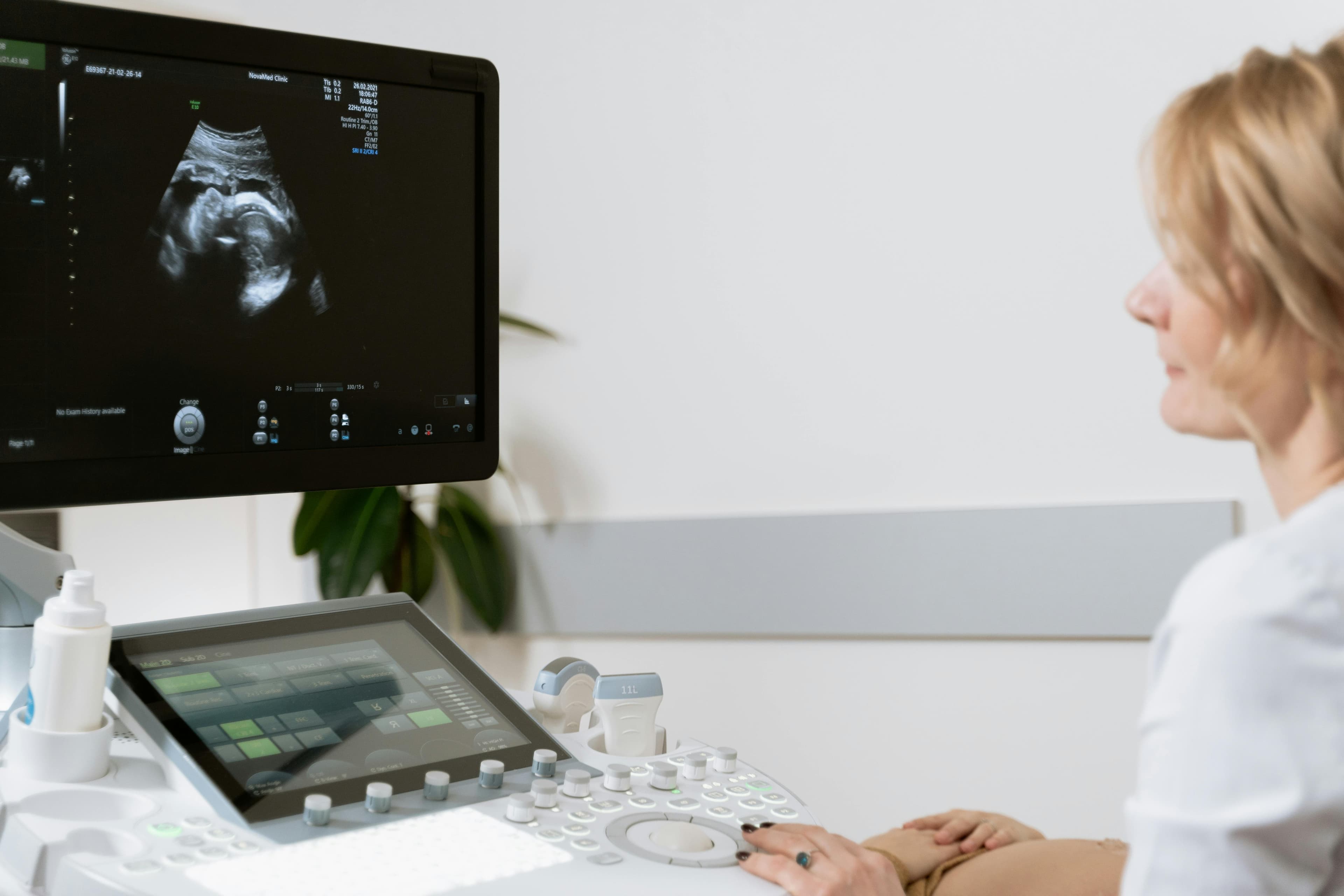
Seeing a heartbeat on ultrasound is a major milestone in early pregnancy. For many people, it brings relief after weeks of uncertainty. At the same time, it often raises new questions — especially about how miscarriage risk changes once cardiac activity is detected.
This article explains what research shows about miscarriage risk after a heartbeat, how that risk typically changes week by week, and how fetal heart rate (FHR) fits into early pregnancy assessment.
What Does It Mean to See a Heartbeat?
A fetal heartbeat is usually detected by transvaginal ultrasound between 6 and 7 weeks of pregnancy, although timing can vary depending on ovulation, implantation, and imaging method.
The presence of cardiac activity indicates that early embryonic development is progressing. From a statistical standpoint, it is associated with a meaningful reduction in miscarriage risk compared to pregnancies where a heartbeat has not yet been observed.
However, this reduction is relative, not absolute.
Chance of Miscarriage After a Heartbeat
Large population studies consistently show that miscarriage risk decreases after a heartbeat is detected. The degree of reduction depends primarily on gestational age and overall clinical context.
Across general populations, approximate miscarriage risk after confirmed cardiac activity is:
- Around 5–10% at 6–7 weeks
- Around 3–5% by 8 weeks
- Continues to decline with each additional week
- Falls below 1–2% by the end of the first trimester for many pregnancies
These figures represent population averages and are not predictions for individual outcomes.
How Risk Changes by Week After Heartbeat
Weeks 6–7
This is when cardiac activity is most commonly first detected. Risk is lower than in earlier weeks but remains higher than later in the first trimester.
At this stage:
- Dating uncertainty is common
- Small differences in embryo size can matter
- Follow-up ultrasounds are often recommended
Week 8
By week 8, miscarriage risk declines further in most studies. Developmental milestones are more established, and many early chromosomal losses have already occurred.
Weeks 9–10
Risk continues to decrease steadily. At this stage, population-level risk is often estimated in the low single-digit percentages.
Weeks 11–12
By the end of the first trimester, miscarriage risk is significantly lower for most pregnancies with a previously detected heartbeat.
Fetal Heart Rate (FHR) by Week in Early Pregnancy
After a heartbeat is detected, fetal heart rate (FHR) is often measured during ultrasound exams. In early pregnancy, FHR increases rapidly and changes week by week as the heart and nervous system develop.
The ranges below reflect commonly observed population ranges and must always be interpreted together with gestational age, dating accuracy, and follow-up findings.
Week 6
Typical observed fetal heart rates around week 6 often fall in the range of approximately:
- 90–110 beats per minute (bpm)
At this stage, the heart has only recently started beating. Heart rates can appear lower early on, especially if ovulation or implantation occurred later than assumed.
Single measurements at this stage are highly sensitive to dating accuracy.
Week 7
By week 7, fetal heart rate typically increases as development accelerates. Commonly observed ranges include:
- 110–160 bpm
Variation is still normal, and small measurement differences can affect readings.
Week 8
Around week 8, fetal heart rate often reaches its peak. Typical observed values are approximately:
- 140–180 bpm
This period represents rapid cardiac and neurological development.
Weeks 9–10
After week 9, fetal heart rate may plateau or begin to gradually decline as maturation continues. Common ranges include:
- 130–170 bpm
At this stage, trends over time become more informative than isolated measurements.
Important Context About FHR
Fetal heart rate must always be interpreted alongside:
- Gestational age and dating certainty
- Embryo size and growth
- Overall ultrasound findings
A single FHR value does not determine pregnancy outcome. Clinicians often rely on repeat ultrasounds to assess progression rather than drawing conclusions from one measurement alone.
Factors That Still Influence Risk After a Heartbeat
Although a heartbeat and appropriate heart rate are reassuring signs, miscarriage risk after heartbeat detection is still influenced by:
- Maternal age
- Previous pregnancy outcomes
- Gestational age at detection
- Fetal growth patterns
- Underlying medical or genetic factors
This explains why two people with similar ultrasound findings may still have different statistical risk profiles.
Understand Risk After a Heartbeat
Once a fetal heartbeat is detected, miscarriage risk typically decreases over time. Population studies show how this risk changes week by week, based on large datasets.
- View the Miscarriage Risk by Week Chart – (Shows average miscarriage probability by gestational week)
What If Symptoms Change After a Heartbeat?
Changes in symptoms after a heartbeat — such as reduced nausea or breast tenderness — are common and often normal. Hormone levels fluctuate, and symptom presence or absence alone is not a reliable indicator of pregnancy outcome.
Contact your healthcare provider promptly if you experience:
- Heavy vaginal bleeding
- Severe or worsening abdominal pain
- Fever or signs of infection
Heartbeat Does Not Eliminate All Risk
Seeing a heartbeat significantly lowers miscarriage risk, but it does not eliminate it entirely. Risk becomes lower, not zero.
Understanding this distinction helps set realistic expectations and reduces unnecessary self-blame when outcomes differ from averages.
Why Individual Risk Can Differ From Averages
Population statistics describe general trends, not guarantees. Factors such as prior losses, fertility treatment, medical conditions, or later ovulation can shift probability above or below the population mean.
This is why healthcare providers emphasize full clinical context rather than relying on a single milestone.
Explore Your Individual Context
While population averages provide helpful context, individual factors can vary. If you want to see how gestational age, maternal age, and pregnancy history apply to your situation, you can explore a personalized estimate.
- Miscarriage Risk Calculator
- Expanded Miscarriage Risk Calculator – (if additional clinical factors are available)
Related Articles
- Understanding Miscarriage Risk: What the Statistics Really Mean
- Miscarriage Risk by Week: How Probability Changes in Early Pregnancy
Key Takeaway
Seeing a heartbeat is an important and reassuring milestone. Miscarriage risk generally declines afterward, especially as pregnancy progresses through the first trimester.
Fetal heart rate provides additional context, but meaningful interpretation always depends on gestational age, trends over time, and overall clinical factors.
Disclaimer: This article is for informational purposes only and does not constitute medical advice. Always consult your healthcare provider regarding questions about your pregnancy or ultrasound findings.